Talking about industrial air filtration is quite general, as there is no single type of pollutant and there are different filtration technologies and mechanisms for industrial units.
How many types are there?
We can distinguish three in particular and will analyse them in this article.
AIR FILTRATION OF FUMES AND DUST
Fumes and dust generated during industrial processes can be extremely harmful to human health and the environment. This problem is common to many productive sectors, which is why there are many filtration systems designed for this type of pollutant that causes numerous pathologies.
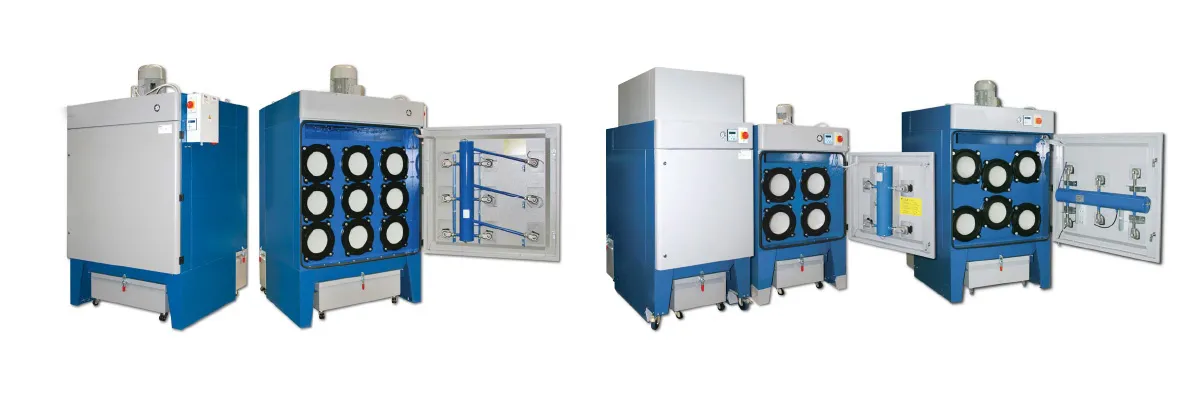
In this context, there are a number of centralised systems equipped with collection and suction points ideally located close to the polluting source that emits the harmful dust and fumes during operation. These remove the waste from the polluting source and, normally through a network of pipes, transport the polluted air to the filtration area where, exploiting the principle of physical separation, the air is purified and then returned to the atmosphere.
Physical separation can take place using cartridge filters, bag filters or the centrifugal force of a cyclone separator. Depending on the particle size of the dust and its concentration, the technology and sizing of the most suitable solution can be identified.
ORGANIC COMPOUNDS
VOLATILE
Volatile organic compounds (VOCs) identify pollutants whose molecules contain different functional groups and together are capable of different physical and chemical behaviours, although they share a high volatility. Organic solvents such as thinners and paints, but also liquid hydrocarbons containing chlorine, fluorine and sulphur, for example, fall into this category. Volatile organic compounds can be classified into three types:
- Anthropogenic compounds, originating from human activities, e.g. from oil and combustion, the main exponents of which are benzene, toluene, methane, carbon tetrachloride and ethanol.
- Biogenic compounds of natural origin, such as the terpenes contained in plant essential oils.
- Anthropogenic and biogenic compounds, such as isoprene.
OIL MIST FILTRATION
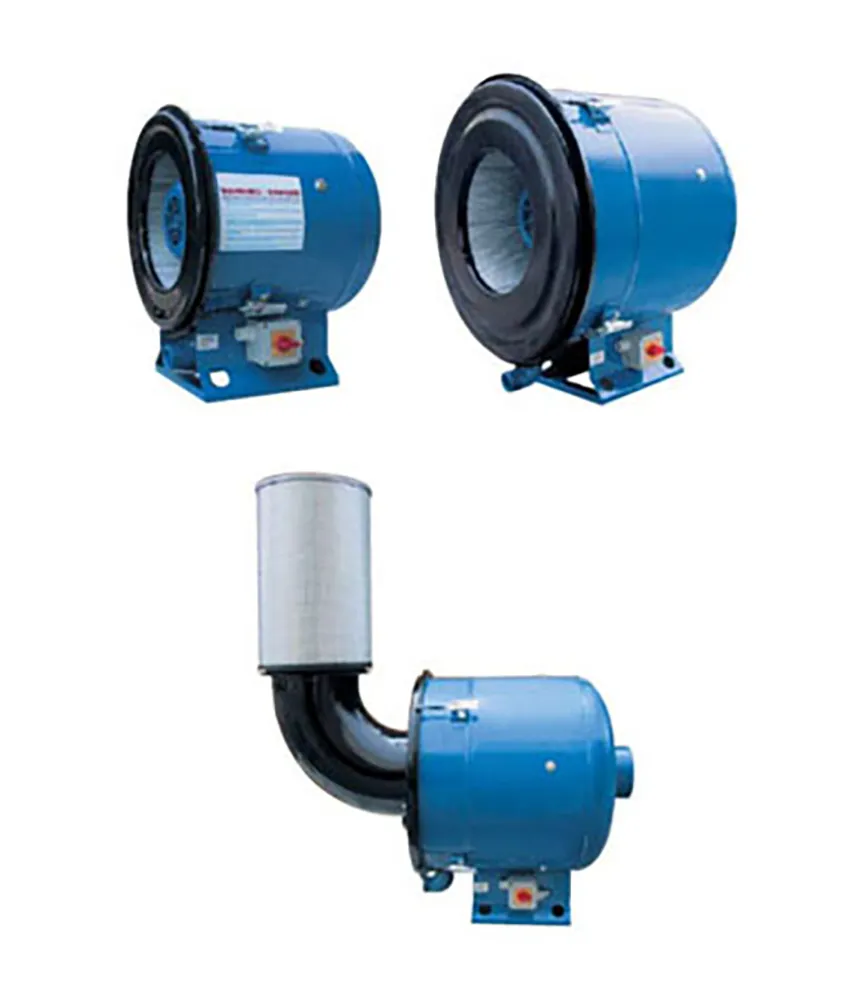
Many companies are faced with the need to filter the oil mists or fogs that develop during production processes in which integral oils and/or emulsions are involved. To reduce these pollutants, it is important to turn to tried and tested technologies used specifically for oil mist reduction.
Small centrifugal filters, designed to be attached directly to machines, or modular centralised solutions ideal for operations in production sources with a greater quantity of pollutants, the most suitable equipment are filters that exploit the
centrifugation and coalescence principle or electrostatic filters.
To eliminate or reduce these organic compounds we use wet filters, such as venturi scrubbers, where the compounds are treated with water or reagents, or regenerative thermo combustors.
It's easy to see that before installing an air filtration system, you need to identify the type of pollutant, the quantity and the specific nature of the installation/assembly and then find the solution best suited to your needs.